Jump to heading Module 6-03 Quadrilateral
Jump to heading 1.Parallelogram
The lengths of the two sides of the parallelogram are 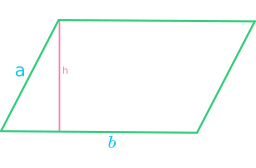
Jump to heading 2.Rectangle
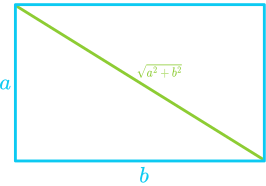
The lengths of the two sides of the rectangle are 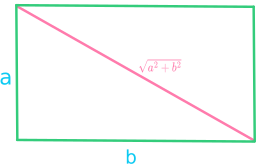
Jump to heading 3.Rhombus
The length of the four sides of rhombus is 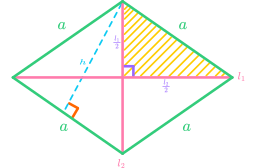
Jump to heading 4.Square
The length of the four sides of a square is 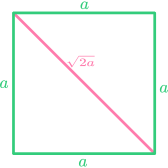
According to the Pythagorean theorem
Jump to heading 5.Trapezoid
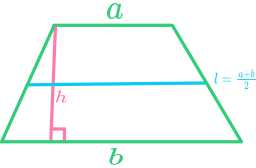
The upper base of the trapezoid is
, the lower base is , the height is , the median is , and the area is . ![]()
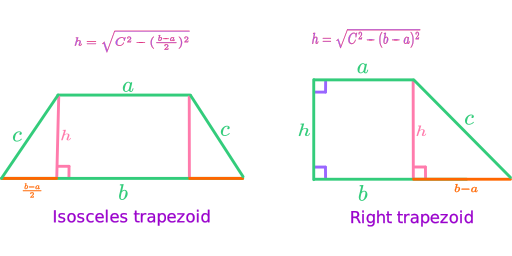
Note: There are two special types of trapezoids — the isosceles trapezoid and the right trapezoid.
![]()
Jump to heading 6.Butterfly Theorem
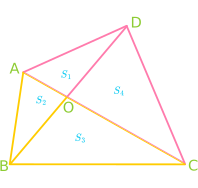
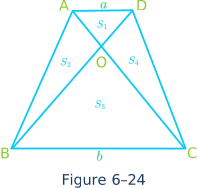
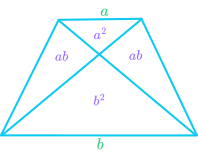
The butterfly theorem provides us with a way to solve the area problem of irregular quadrilaterals by constructing a model; on the one hand, the area relationship of the irregular quadrilateral can be linked to the triangles inside the quadrilateral, on the other hand, the proportional relationship of the diagonal corresponding to the area can also be obtained.
Jump to heading
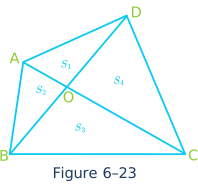
According to the ratio of areas of triangles with equal heights being equal to the ratio of their bases, we have(Top Bottom=Left Right). ![]()
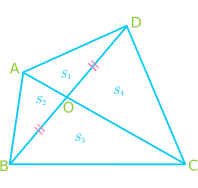
- According to the basic proportionality theorem
.
Similarly,. ![]()
Jump to heading
. ![]()
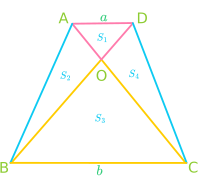
.
(Similar).
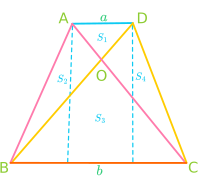
By combining the above four, the unified proportion is obtained:
![]()
Jump to heading Formula derivations
Jump to heading 7.Focus 1
Square
- The length of the four sides is
, the four interior angles are , the area is , and the perimeter is .
Jump to heading
Jump to heading Solution
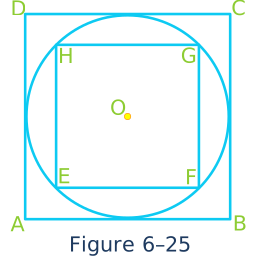
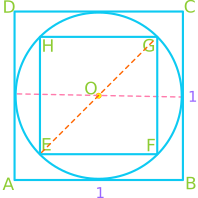
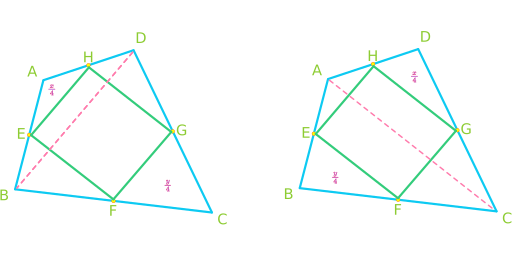
Show known conditions diagonal is the diameter of the circle ![]()
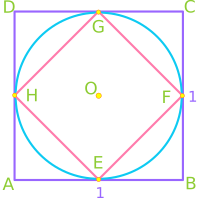
Connecting the midpoints of the sides of any quadrilateral forms a new quadrilateral whose area is half the area of the original one ![]()
Jump to heading Conclusion
- Derived Solution
According to the Solution, get, so choose . - Formula used
- Derivation: Connecting the midpoints of the sides of any quadrilateral forms a new quadrilateral whose area is half the area of the original one
![]()
In any triangle, the triangle formed by joining the midpoints of two sides has an area equal toof the original triangle. Example:
(The same is true for other triangles)
Jump to heading
Jump to heading Solution
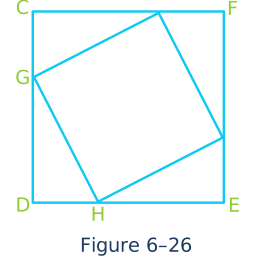
Show known conditions
![]()
Jump to heading Conclusion
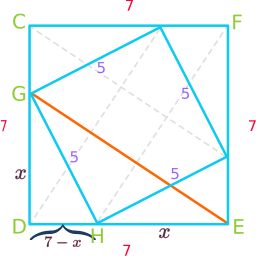
- Derived Solution
According to the Solution, get, so choose . - Formula used
Jump to heading
Jump to heading Solution
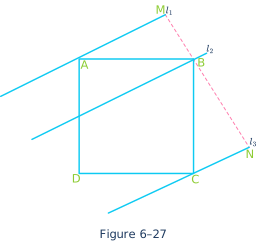
Show known conditions
![]()
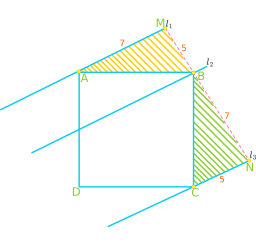
Jump to heading Conclusion
- Derived Solution
According to the Solution, get, so choose . - Formula used
Jump to heading 8.Focus 2
Rectangle
- The rectangle has two pairs of opposite sides that are perpendicular to each other, and its diagonals bisect each other.
- The problem of a straight line appearing in a rectangle and dividing it into several triangles.
Jump to heading
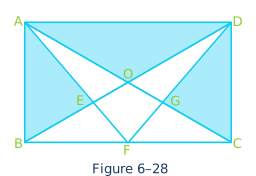
Jump to heading Solution
Show known conditions
![]()
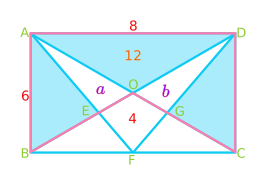
Jump to heading Conclusion
- Derived Solution
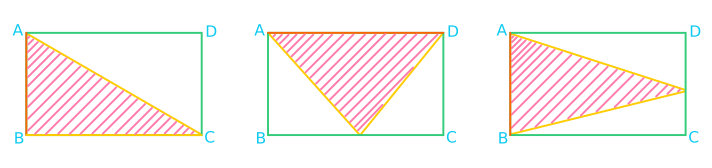
According to the Solution, get, so choose . - Diagonals of a rectangle divide it into four congruent right triangles, each with
of the rectangle's area ![]()
Jump to heading A triangle with base and height equal to those of a rectangle has
the area of the rectangle ![]()
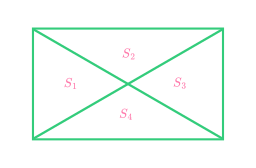
Jump to heading
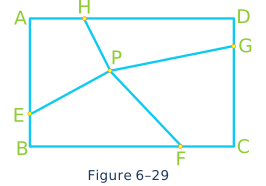
Jump to heading Solution
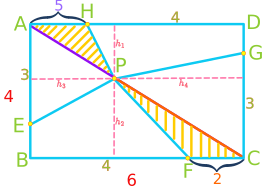
Solve by joining heights
![]()
Jump to heading Conclusion
- Derived Solution
According to the Solution, get, so choose . - Formula used
Jump to heading
Jump to heading Solution
Show known conditions
![]()
Jump to heading Conclusion
- Derived Solution
According to the Solution, get, so choose . - Formula used
- Additionally, Cuboid surface area identity
- Inequality sign flips
Operation Inequality sign changes? Multiply divide by negative ✅ Flip the sign Multiply divide by positive ❌ Do not flip the sign Add subtract both sides ❌ Do not flip the sign
Jump to heading 9.Focus 3
Rhombus
- In a rhombus, the two diagonals bisect each other at right angles, and its area equals half the product of the diagonals.
Jump to heading
Jump to heading Solution
Jump to heading Conclusion
- Derived Solution
According to the Solution, get, so choose . - Formula used
Jump to heading
Jump to heading Solution
Show known conditions
![]()
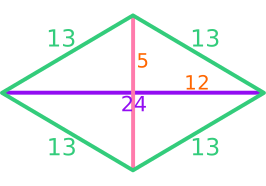
Jump to heading Conclusion
- Derived Solution
According to the Solution, get, so choose . - Formula used
Jump to heading
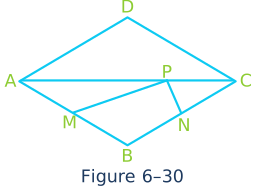
Jump to heading Solution
Solve by Reflectional symmetry
![]()
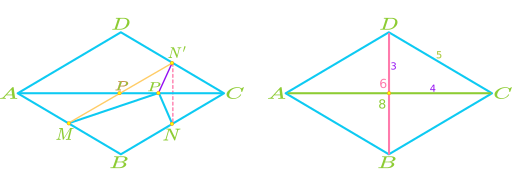
Jump to heading Conclusion
- Derived Solution
According to the Solution, get, so choose . - Formula used
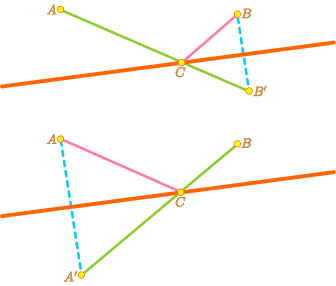
- Reflectional symmetry
![]()
After reaching the orange line by the shortest distance, return.
Jump to heading 10.Focus 4
Parallelogram
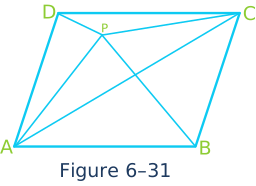
- The two pairs of opposite sides of a parallelogram are parallel and equal. The core point of a parallelogram is the diagonal. In addition, if there are no other requirements, the parallelogram can be specialized into a rectangle or square to find the answer.
Jump to heading
Jump to heading Solution
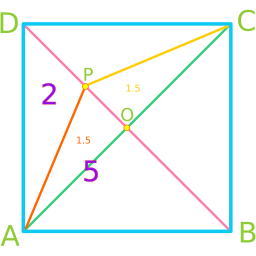
Solve by specializing to a square
![]()
Jump to heading Conclusion
- Derived Solution
According to the Solution, get, so choose .
Jump to heading 11.Focus 5
Trapezoid
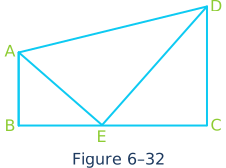
- Analyze, according to the area formula and properties of trapezoid, paying attention to the two special types of trapezoids: right trapezoids and isosceles trapezoids.
Jump to heading
Jump to heading Solution
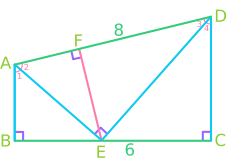
Show known conditions
![]()
Jump to heading Conclusion
- Derived Solution
According to the Solution, get, so choose . - Formula used
Jump to heading
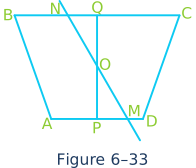
Jump to heading Solution
Show known conditions
![]()
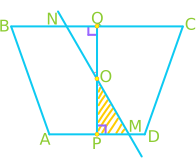
Jump to heading Conclusion
- Derived Solution
According to the Solution, get, so choose .
Jump to heading 12.Focus 6
Other quadrilaterals
- When encountering other quadrilaterals, you can divide them into triangles to solve the problem or analyze them using the properties of special quadrilaterals.
Jump to heading
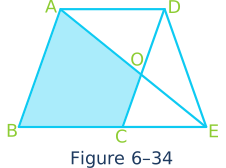
Jump to heading Solution
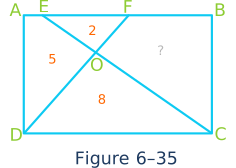
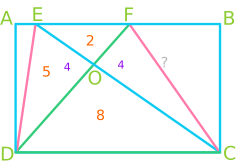
Solve by forming a trapezoid through the diagonals of irregular quadrilateral
![]()
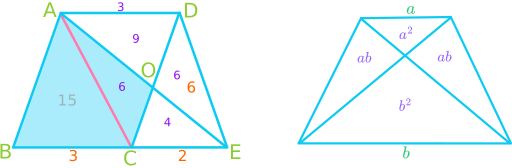
Jump to heading Conclusion
- Derived Solution
According to the Solution, get, so choose . - Formula used
Jump to heading
Jump to heading Solution
Solve by forming a trapezoid through the diagonals of irregular quadrilateral
![]()
Jump to heading Conclusion
- Derived Solution
According to the Solution, get, so choose . - Formula used
Jump to heading 13.Focus 7
Polygon
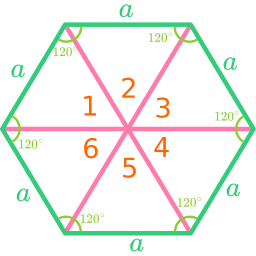
When encountering polygon, you can draw auxiliary lines (Usually by connecting the diagonals) to divide it into several triangles for solving.
Jump to heading Regular Hexagon
![]()
Interior Angles of Common Regular Polygons
Regular Polygon Number of Sides(n) Each Interior Angle( ) Equilateral Triangle 3 Square 4 Regular Pentagon 5 Regular Hexagon 6 Regular Octagon 8 Regular Dodecagon 12
Jump to heading
Jump to heading Solution
Jump to heading Conclusion
- Derived Solution
According to the Solution, get, so choose . - Formula used
| Platforms | Courses | Coursewares |
|---|---|---|
| YouTube | Watch | Courseware |
| Dailymotion | Watch | |
| Rumble | Watch |